Monday, January 10, 2011

Changes to Medicare Part D

Medicare Part D Downfalls


The turn of the year always brings changes to Medicare benefits… but this year wealthier people get a special change to their Part D premium to reward them for their high income.

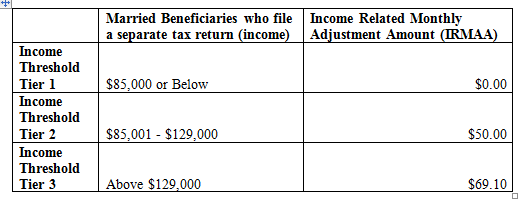
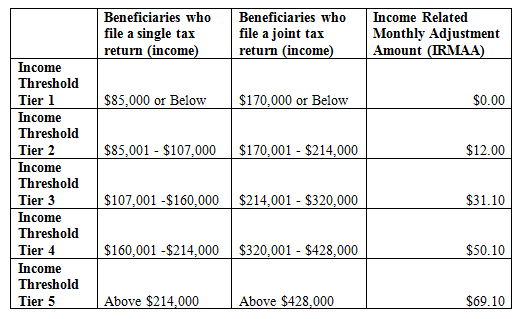
So what’s the change? Starting January 1, 2011, Medicare beneficiaries face a new income related monthly adjustment amount (IRMAA) to their Medicare Part D premiums. Depending on income as filed on the 2009 tax return, an additional sum may be due each month:


How will you know for certain what you will be required to pay? The Social Security Administration will send you a letter in the mail notifying you of the extra amount that must be paid for the IRMAA.

The surcharge on your Medicare Part D premium is NOT to be paid to the provider of your Part D drug plan. Regardless of the method used to submit normal Part D premiums to your insurance provider, the extra monthly cost required by the IRMAA will be collected by the Social Security Administration. Please remember, if you do not have a Medicare Part D drug plan, you will not have to pay any extra money in Medicare premiums.


Until next time,


Andrew Herman

AH Insurance Services, Inc.

Thursday, December 30, 2010

Health Care Advertisements

Health Care Plan Advertisements: Let The Buyer Beware


All around us - on television, on the radio, and on the internet when we’re browsing - there are advertisements for health care plans. Some specifically relate to changes in health care mandated by the new Patient Protection and Affordable Care Act (PPACA), while others are generic advertisements, not new in their message, but only in their graphics. Be wary of these commercials, for no matter how glitzy they may be, their primary purpose is to sell rather than to inform.

In looking into the issue of advertisements, AH Insurance Services reviewed specific promotional materials from Aetna and United Healthcare. We were hoping to encounter easy-to-understand sound bites that would summarize the new benefits mandated by health care reform and explain the impact of these benefits on plan premiums. What do you suppose we found?

Well, we found lots of information - but not all of it clear-cut - and much of the relevant information is buried from the consumer.

Aetna, for example, provides real information about the impacts of PPACA on health insurance plans via their Homepage, but first you must search for “health care reform” and then sort through material provided in a long list of URLs. When it comes to Aetna’s advertisements, it’s difficult to discern what is true from what is mere embellishment without having prior knowledge about health care reform provisions. Aetna’s advertisements promote new benefits as innovative plan features, when in reality these benefits are mandated by PPACA. So even though Aetna makes their plan options sound original, consumers will find them available with every new health plan.

United Healthcare uses advertisements that emphasize consumer satisfaction and security. That’s all fine, but what about explaining the health plan changes and quantifying any extra costs? United Healthcare’s visual pieces, such as the advertisement to the left, emphasize the importance of obtaining a health care plan, and merely give assurance of protection. Radio commercials by United Healthcare, such as those found on United Healthcare's National Advertising website, also emphasize the protection that having health insurance provides, while giving little factual information on new health benefits.

We see on United Healthcare's National Advertising website video advertisements in which consumers give their impressions of the health care they purchased for their small businesses. Once again, these give little information about what the actual benefits and costs are, but they do give four essential tips to purchasing health insurance:

1. Look at the benefits

2. Compare prices

3. Research the quality of service

4. See if your doctors are covered

Do not be lulled by non-informative advertisements containing fantastic consumer reviews. We all pay mind to good testimonials, but it would be foolish to think that insurance companies use a random sample to choose which reviews will be shared with the public. We suggest listening closely to the reviews, and then doing due diligence to confirm their integrity.

Even though a company may include little information in its advertisements, its products are not necessarily inferior. The key is to do your research, either by yourself or with a trusted independent insurance agent. Make sure you weigh the benefits and potential shortcomings of each plan, and compare premiums with several competitors. Sometimes, quoted rates vary substantially between companies, but that may not tell the full story as the company with lower quoted rates might employ much more stringent medical underwriting. Currently, it’s still permissible for health insurance companies to charge a higher premium, impose exclusions for pre-existing conditions, or outright deny adult applicants based on their medical history.

While we didn’t specifically review any of Humana’s advertisements for this post, we should mention that we haven’t noticed any mention in the media yet of the new lower new business premium rates Humana will be rolling out on January 2nd on its Florida “HumanaOne” individual health product. Lower rates - now that’s an expression you don’t hear very often. Perhaps in this case, you heard it from us first!

For a summary of the changes to health care plans mandated by the PPACA, please visit our prior blog posts titled New PPACA Provisions I and New PPACA Provisions II.

Until next year,

Andrew Herman

AH Insurance Services, Inc.

Tuesday, December 14, 2010

The New Medicare Advantage Disenrollment Period (MADP)

MEDICARE ADVANTAGE DISENROLLMENT PERIOD (MADP) runs from:

January 1 through February 14

New for 2011, the Open Enrollment Period (OEP) has been replaced with the Medicare Advantage Disenrollment Period (MADP). Medicare beneficiaries can no longer make a switch in their Medicare Advantage plan during this period; however members may disenroll from Medicare Advantage and return to Original Medicare.

Medicare Advantage customers with prescription drug coverage as of the beginning of MADP should take note of the following:
  1. If you are enrolled in a Medicare Advantage plan that includes prescription drug coverage, you may be able to return to Original Medicare (plus any stand-alone drug plan, or none).
  2. If you are enrolled in a Private Fee-for-Service (PFFS) Medicare Advantage plan plus a stand-alone drug plan, you may be able to return to Original Medicare (keeping the same drug plan or dropping it).
  3. If you are enrolled in a Private Fee-for-Service (PFFS) Medicare Advantage plan that includes prescription drug coverage, you may be able to return to Original Medicare (plus any stand-alone drug plan, or none).
If you want to disenroll, the plan must accept your disenrollment request so you can return to Original Medicare; however, Medicare beneficiaries on non-PFFS Medicare Advantage plans will be automatically disenrolled upon their enrollment into a stand-alone drug plan during the MADP.

Please be aware that if you chose to disenroll and you choose not to enroll in a prescription drug plan, you may have a late enrollment penalty if you choose to enroll in a prescription drug plan in the future.

If you disenroll during the MADP, your disenrollment will be effective on the first day of the month following receipt of the disenrollment request.

If your situation doesn't fall into one of the three categories above, please don't hesitate to Contact Us.

Monday, November 29, 2010

Changes to Grandfathered Group Health Care Plans

Group Health Plans Got New Grandfathering Guidelines


On June 17, 2010, the Departments of Health and Human Services, Labor and Treasury (the “Departments”) released interim final regulations relating to the status of grandfathered health plans under the Patient Protection and Affordable Care Act (PPACA). These regulations set forth rules (outlined in a previous blog post) for determining whether or not a plan qualifies as grandfathered, how that status is maintained, and how a grandfathered plan loses the coveted status. One such rule provided that a group health plan would lose its grandfathered status if the plan entered into a new policy, certificate or contract of insurance after March 23, 2010.

Five months later, on November 15, 2010 the Departments issued an amendment generally allowing group health plans to switch insurance companies without forfeiting grandfathered status, as long as the plan is not changed in a manner that violates any of the other rules for maintaining grandfathered status. There are a few major circumstances through which this change protects the health care recipient:

  • An insurer may stop selling a certain type of plan
  • A company may change hands
  • An employer may find a plan offering similar healthcare coverage at a lower cost
  • Insurance carriers are less likely to impose unfair renewal rate increases on group plans that are clinging to their grandfathered plan status
  • Third-party administrators may now be changed for all grandfathered health care plans (including individual)

The November 15th amendment does seem to make the grandfathering process easier and more consumer-friendly. However, it is important to note that this applies to grandfathered group plans only; individual health insurance policyholders who change their insurance carrier still will lose grandfathered status. Also, the amendment isn’t retroactive, as plans that lost grandfathered status between March 23, 2010 and November 15, 2010 cannot regain get their status back.

Is this good? We think so, except for the fact that the Departments chose not to make the amendment retroactive to March 23rd, which in our viewpoint would have been more consistent.

Does this mark the beginning of many changes to PPACA? We think it’s possible, but of course only time will tell.

Until next time,


Andrew Herman

Tuesday, November 9, 2010

Social Security Sets Premiums for 2011

Since there was no increase in Social Security for 2011, Medicare Part B premiums are frozen at the levels Medicare Beneficiaries were paying in 2010. For people who are new to Medicare in 2011, the Part B premium will increase to $115.40/month, a 4.4% increase. There are now three different amounts for Part B premium, dependent upon when the person first enrolled in Medicare Part B:

- 2011 enrollees pay $115.40
- 2010 enrollees pay $110.50
- 2009 and prior enrollees pay $96.40

Starting January 1, 2011, your Part D monthly premium could be higher based on your income. This includes Part D coverage you get from a Prescription Drug Plan (PDP), a Medicare Advantage Prescription Drug (MAPD) plan or a Medicare Cost Plan that includes prescription drug coverage. If your modified adjusted gross income as reported on your IRS return from two years ago is above $85,000 for a single return or $170,000 for a joint return, you will pay an income-related monthly adjustment amount in addition to the plan's stated Part D premium. If you have to pay a higher amount based on your income, Social Security will contact you this month with the specific information.

Also in 2011, the Medicare Part A Deductible increases from $1100/benefit period to $1132/benefit period; and the Medicare Part B Deductible increases from $155/calendar year to $162/calendar year.

If you would like to receive information on 2011 Medicare Health & Drug Plans, please contact us.

Until next time,

Andrew Herman
AH Insurance Services, Inc.
Monday, October 25, 2010

Medicare 2011: The Rules Keep Changing

Part II of a Two-Part Series


Part I of this series explained enrollment period changes impacting Medicare Health & Drug Plans; and in this Part we’ll share changes being made to Medicare Part D drug benefits. For our readers who may not be familiar with Medicare Part D, we’ll start out by providing an overview of the program mechanics.

Medicare Part D drug coverage is available to Medicare Beneficiaries enrolled in Part A and/or Part B. Beneficiaries access this voluntary program through insurance carriers and can get their coverage through a standalone Prescription Drug Plan (PDP) or a Medicare Advantage Prescription Drug (MA-PD) plan (must have both Medicare Parts A and B to enroll in MA-PD).

PDPs and MA-PDs operate on a calendar year basis and provide drug coverage in accordance with the following parameters:

• The plan deductible cannot exceed $310 (many plans have a $0 deductible)


• After the deductible is reached, the Beneficiary is responsible for paying drug co-pays according to the “tier” level of each drug as shown in the plan’s formulary (medicines that don’t appear on the formulary aren’t covered at all)


• When the combined total of the Beneficiary's payments and the insurance company's contributions reaches $2,830, the Beneficiary enters the coverage gap (the infamous “donut hole”)


• While in the coverage gap, the Beneficiary is required to pay for all prescription drugs out-of-pocket


• Once the Beneficiary’s total out-of-pocket drug expenses reach $4,550, the Beneficiary is in the Catastrophic coverage period; and medicines on the formulary are now covered for just small co-payments until the end of the year

So what’s changing in 2011? First, the $2,830 calendar year threshold level to fall into the donut hole increases to $2,840; and second, Medicare beneficiaries will receive a substantial discount on their medicines while in the donut hole (a 50% discount on brand-name drugs and a 7% discount on generics).

The donut hole is filling up.

The Medicare Part D benefit will be further improved over the years, so that the donut hole will gradually fill up. Discounts for both brand-name and generic drugs are scheduled to increase every year until the donut hole is gone for good in 2020.

Click here for more detailed information on the Medicare Part D program.

Monday, October 18, 2010

Medicare 2011: The Rules Keep Changing

Part I of a Two-Part Series


Part I of this series explains the Medicare enrollment period changes that are taking place. In Part II, we will discuss changes coming to Medicare Part D drug benefits for 2011.

Since 2006, there have been an Annual Election Period (AEP) and an Open Enrollment Period (OEP) for each year, during which Medicare beneficiaries may change their Medicare coverage. During the Annual Election Period, a beneficiary could enroll into or dis-enroll from Medicare Advantage and Medicare Part D plans for the upcoming year (starting January 1), no matter what type of Medicare coverage the beneficiary had the preceding year.

For example, during AEP (11/15 – 12/31) a Medicare beneficiary could enroll in the Part D program for the first time; or a beneficiary on Medicare Advantage could sign up with a new insurance carrier. One could make as many changes as desired during AEP, and the last plan enrollment (signed and dated by December 31st) would be the one to take effect in the new year.

The OEP has been the first three months of each calendar year, during which time Medicare beneficiaries were allowed to make one plan change. These changes had to be “like-for-like” with respect to having Part D drug benefits (i.e., the status of having or not having Part D benefits, either on a standalone basis or as part of a Medicare Advantage plan, became locked in on January 1st). Despite the restriction, many people took advantage of the opportunity to switch their Medicare Advantage plan or return to original Medicare during the OEP.

For 2011 enrollments, the AEP rules remain the same but the OEP has been eliminated. OEP has been eliminated and replaced with the Annual Disenrollment Period (ADP) that will run from January 1st through February 14th. During the new ADP, one can still opt out of Medicare Advantage in favor of original Medicare; however ADP does not allow a switch in Medicare Advantage plans, nor does it allow someone in the original Medicare program to enroll into a Medicare Advantage plan. Beneficiaries dis-enrolling from a Medicare Advantage plan will get a special enrollment period (SEP) to join a standalone Part D plan.

Since there is no longer any OEP, it is especially important that Medicare beneficiaries make the best possible decision on their 2011 coverage during this year’s AEP, which as in the past runs from November 15th through December 31st.

Anyone wanting a head start on 2012 Medicare enrollments should take note that the AEP will start earlier beginning in the fall of 2011! Instead of running the last six weeks of the calendar year, future AEPs are scheduled to take place between October 15th and December 7th. Enrollments will take effect on January 1st as always.

Friday, October 8, 2010

Medicare Advantage Ratings

The Secrets in the Stars


If you are enrolled in a Medicare Part C (also known as Medicare Advantage) health care plan, you may want to look over its ratings… if it even has any. Each Medicare Advantage plan is supposed to be rated, but some are not, and people often don’t know what the stars are supposed to signify.

The rating system is quite complex. It is based on 33 criteria pertaining to Medicare Advantage plans (52 if the plan includes prescription drug coverage). The Healthcare Effectiveness Data and Information Set, the Consumer Assessment of Healthcare Providers and Systems, the Health Outcomes Survey, and the Centers for Medicare and Medicaid Services collect data on the following categories related to Medicare Advantage Programs in order to calculate the ratings:

• Staying healthy and preventative care

• Management of chronic conditions

• Responsiveness and care

• Health plan members complaints, appeals, and choosing to leave the plan

• Customer service

Many of the smaller providers of Medicare Advantage programs are not currently rated by government officials- a problem that should be remedied within the next few years. Problems come with the ratings of Medicare Advantage plans, as health care plans are often robust to change; therefore, it typically takes two, if not three, years for any insurance provider to be able to increase their ratings.

Currently, less than 25% of all Medicare Advantage enrollees are in plans with ratings of at least 4 stars, on a scale from 1 to 5. In some states, Medicare Advantage enrollee participation in highly rated plans is low because highly rated plans are not easily accessible. For example, in Alaska, Montana, Nebraska, Mississippi, and Vermont, no beneficiaries even have the option of obtaining a plan rated with 4 or more stars. On the other hand, there are some states in which many Medicare Advantage enrollees could have highly-rated plans, but choose not to. In Florida, 82% of Medicare Advantage beneficiaries have access to plans with 4 or more stars, but only 8% are enrolled in such plans. Click here to access the full study done by the Kaiser Family Foundation. Why is this the case? Gretchen Jacobson, a principal policy analyst for Kaiser Family Foundation, explains that "Whether or not your doctor is in [an Advantage plan] network may be more important to someone than a quality rating.” Of course, one still ought to individually choose their plan, as the rating does not give proper indication of any particular aspect of the plan. And one particular aspect may be what the consumer is looking for.

Starting in 2011, some things are going to change for Medicare Advantage providers based on the ratings they receive. In 2011, all plans with 4 or more stars will obtain bonuses of 1.5%. These bonuses will be increased to 3% in 2012 and 5% from 2013 onward.

There are additional incentives coming for Medicare Advantage insurers, including small and low-enrollment plans that can receive quality bonuses and rebates starting 2012. New plans will obtain quality bonuses of 1.5% in 2012, 2.5% in 2013, and 3.5% in 2014.

What does this mean for consumers? Although there are no guarantees, it seems likely that due to the cash incentive, Medicare Advantage providers will seek to improve the quality of their healthcare, and, by extension, their ratings. This is good for beneficiaries.

Check back soon for complete details on 2011 Medicare Enrollment and Disenrollment periods. It’s especially important this year that you choose a suitable Medicare Advantage plan during the Annual Election Period (11/15 – 12/31), since the Open Enrollment period that used to run for the first three months of each calendar year has been eliminated.

Saturday, October 2, 2010

New PPACA Provisions II

Part II of a Two-Post Series – What Just Changed on September 23rd?


In Part I of this series, we outlined how health care reform provisions that went into effect on September 23rd impact employer-based group coverage; and in this Part we’ll take a closer look at how these changes are impacting the individual health insurance marketplace.

As in the group marketplace, “Grandfathered” individual plans (health plans that existed before the law was enacted on March 23rd and remain essentially unchanged) must meet only a portion of the full requirements. However, it is worth noting that turnover is much higher in the ordinary course of individual health insurance business, so it’s expected that a relatively lower percentage of individual policies will remain grandfathered for any significant period of time.

Provisions that impact all individual plans issued or renewed after September 23rd are:

  • No lifetime dollar limits may be imposed on essential benefits.
  • No rescissions are permitted, except in case of fraud or intentional misrepresentation.
  • Children may stay on their parents’ policies until age 26 regardless of financial dependency, student status, marital status, employment, eligibility for other coverage, or any combination of these.
     
Non-grandfathered individual insurance plans also must comply with the following:

  • Plans can’t impose annual limits that are less than $750,000 (annual limits will be eliminated entirely by 2014).
  • Pre-existing condition exclusions may not be imposed on children under the age of 19.
  • The full cost of preventive care must be provided without cost sharing.
  • Plans that require or provide for a Primary Care Physician (PCP) designation must allow each member to designate any in-network PCP, or pediatrician for children, accepting new patients. Plans may no longer require an authorization or referral to an Ob-Gyn. Prior authorization for emergency services also is prohibited – and no additional cost sharing is allowed for out-of-network emergency services.

These new regulations should be good news for individuals who prefer to stay with a particular insurer because, for example, they have pre-existing conditions that would make it difficult for them to change carriers before health coverage becomes guaranteed issue in 2014. For these people continuing their plan, the insurer will have only a limited ability to increase their cost sharing or decrease plan benefits. Further, due to other provisions of PPACA such as Medical Loss Ratio minimums, their insurer will be limited in ability to raise premiums too.

A huge unintended consequence of PPACA on the individual marketplace is the recent decision by the carriers to stop selling child-only policies. The five largest publicly traded health insurers based on enrollment (Aetna, Cigna, Humana, UnitedHealth Group and WellPoint) all have announced they are no longer issuing child-only individual policies, although children still can get coverage through a family plan in the individual market.

Carriers will continue to administer individual child-only health insurance policies already on the books, but are discontinuing new sales “to protect our current members from significant price increases” according to a statement made by Aetna. Obviously, carriers are concerned about cost since there are no rules or provisions set forth in PPACA that would prevent or otherwise discourage parents from waiting until their child gets sick before they buy coverage. Rather than comply with the PPACA mandate to issue all child applications without any exclusion on pre-existing medical conditions, the insurers decided to stop offering new coverage.

A provision in the new law tries to allay claims anti-selection by allowing insurers to sign up children only during a fixed annual enrollment period; however there’s no set time of the year for all insurers to hold open enrollment like there is in the Medicare market. The reality is that parents still could wait until their child becomes ill, and then shop around for an individual health insurer that just so happens to be holding open enrollment.

The decision by insurers to stop selling child-only policies could negatively impact children from middle-class families that don’t have employer-based coverage but have incomes too high to qualify for public assistance programs such as Medicaid. Industry experts estimate that about one million children currently are covered under child-only health policies in the United States.

Check back soon for new updates. Coming next will be information about Medicare Part C ratings.

New PPACA Provisions I

Part I of a Two-Post Series – What Just Changed on September 23rd?


September 23, 2010 is exactly six months after President Barack Obama signed PPACA into law, and it marks the day that many important provisions take effect impacting both group and individual health insurance coverage. In Part I of this series, we’ll discuss the impact of these reform provisions on employer-based group coverage; and in Part II we’ll take a look at the individual health insurance marketplace, including an unintended consequence of PPACA.

First, now that we’re into October does this mean your group health insurance just changed? Not necessarily, as the new requirements actually are effective on the renewal date of your group plan. If your plan year starts January 1st, as many do, that’s when the changes start.

“Grandfathered” plans, which are health plans that existed before the law was enacted on March 23rd and remain essentially unchanged, must meet only some of the requirements. New health plans and those with significant changes in benefits or out-of-pocket costs must comply with further changes as mandated by PPACA. If you get your coverage through work, ask your employer whether or not your health plan renewal is a Grandfathered plan.

Here are provisions affecting all group plans issued or renewed after September 23rd:

  •  No lifetime dollar limits may be imposed on essential benefits. Those who have maxed out because of prior caps but remain eligible for coverage must be reinstated on the first day of the group health plan renewal.
  •  Plans can’t impose annual limits that are less than $750,000 (annual limits will be eliminated entirely by 2014).
  • No rescissions are permitted, except in case of fraud or intentional misrepresentation.
  • Pre-existing condition exclusions may not be imposed on children under the age of 19.
  • Children may stay on their parents’ policies until age 26 if coverage isn’t available through their work, regardless of marital status.

Non-grandfathered health insurance plans also must comply with the following:

  • The full cost of preventive care, as recommended by the U.S. Preventive Services Task Force, must be provided without copays, coinsurance or plan deductibles (preventive benefits under grandfathered plans may maintain cost sharing).
  • Plans must not discriminate in favor of highly compensated individuals.
  • Plans must report on their quality of care improvement activities.
  • New requirements apply for internal and external appeal procedures against claims denials (although group plans already must provide internal appeals under ERISA and most states require that plans provide both internal and external appeal procedures).
  • Plans that require or provide for a Primary Care Physician (PCP) designation must allow each member to designate any in-network PCP, or pediatrician for children, accepting new patients. Plans may no longer require an authorization or referral to an Ob-Gyn. Prior authorization for emergency services also is prohibited – and no additional cost sharing is allowed for out-of-network emergency services.
Click here for more details on the September 23rd health care reform changes as they relate to employer-based group health coverage (document provided courtesy of Humana).